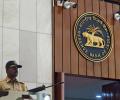
With retail inflation witnessing significant uptick in May, the Reserve Bank of India (RBI) is likely to maintain status quo in its August monetary policy review, according to a report. According to the SBI's research report- Ecowrap, inflation may remain elevated in the coming months due to several global and domestic factors. "We expect a status-quo in August. We believe RBI would still try to find a marriage of convenience of regulatory and developmental measures and monetary policy in August policy," the research report said on Wednesday.

Mutual funds have launched a clutch of new fund offers in the silver ETF (exchange traded fund) category this year and collected Rs 1,400 crore in assets after the introduction of the newly-created investment asset class by market regulator Sebi in 2021. Further, fund houses including Kotak Asset Management Company have filed draft documents with the markets regulator to float silver ETF as well as silver ETF fund of funds for investors, information with the Securities and Exchange Board of India (Sebi) showed. These NFOs (new fund offers) are providing an opportunity to the investors to digitally invest and own silver which is easily tradable during market hours.

Mandatory hallmarking of gold would be a positive in making the gold market more organised. Mandatory hallmarking would come into effect from January 15, 2020, with a one-year transition period for trade to sell existing inventories. Experts also expect more policy measures next year to bring in more transparency in terms of gold as an asset class.

Indian rupee is likely to test 76-76.50 levels as a relatively strong greenback, boiling crude prices and COVID headwinds deepen the depreciation bias for the domestic currency, according to experts. One of the significantly-hit Asian currency in recent months amid uncertain economic times, rupee is expected to see a consolidation in the vicinity of the current level before being pulled towards the depreciation bias. While the equity market has been surging with occasional blips, the rupee has mostly been weak against the US dollar in recent months.

Amid fears of a third wave of coronavirus pandemic and hardening of retail inflation, the Reserve Bank is likely to maintain status quo on interest rate and watch the developing macroeconomic situation for some more time before taking any decisive action on monetary policy. The RBI is scheduled to announce its bi-monthly monetary policy review on August 6 at the end of the three-day meeting -- August 4-6 -- of the Monetary Policy Committee (MPC). The RBI Governor-headed six-member MPC decides on the key policy rates.

Quinoa is said to play a role in the treatment of as many as 20-odd ailments, including liver problems, angina, notes Surinder Sud.

Canada is the top supplier of pulses to India, which is expected to import 1 million tonnes more this year.

India will need to travel back in time and seek inspiration from football greats Tulsidas Balaram and Chuni Goswami to deftly dribble around and sidestep the West-imposed price cap on exports of Russian seaborne crude oil. India depends on imported oil to meet 86 per cent of its needs, of which nearly a quarter now comes from Russia. The copious flows are roughly 10 per cent cheaper than competing suppliers helping India save billions of dollars in fuel costs.

Strict lockdown-like restrictions are already in place in the southern stateand the Pinarayi Vijayan government decided to clamp the complete shutdown in the wake of severe spike in the positive cases.

'India's manufacturing will take 10-15 years to catch up with China.'

India's growth projection released by the latest World Economic Outlook remains unchanged from its previous WEO (World Economic Outlook) update of July this summer but is a three-percentage point in 2021 and 1.6 percentage point drop from its April projections. According to the latest WEO update, released ahead of the annual meeting of the IMF and the World Bank, the world is expected to grow at 5.9 per cent in 2021 and 4.9 per cent in 2022.

Gold is usually seen as a safe-haven when stocks are falling or when inflation is rising. With prices of the yellow metal hovering near record highs, people are also putting off their jewellery purchases. Along with a subdued marriage season, the orders with price open and settled on delivery day, too, are getting cancelled. Apart from high, volatile prices, there is no gold rush yet for the safe-haven asset, crimping demand.
A few years ago, when top officials of Indian state-run refiners went to Dubai to negotiate a crude oil supply contract, a senior official from state-owned Saudi Aramco told them, "We can negotiate on anything, but I am the last man standing for you. "Nobody can offer the range of crudes we do with certainty," an official who was part of the negotiating team recalls. Perhaps that explains why Saudi Arabia is less concerned about losing its place as India's premier oil supplier to an upstart like Russia, which emerged from nowhere to become India's biggest crude oil supplier in September and October.

After three consecutive years of infusing huge funds, foreign portfolio investors retreated from the Indian equity markets in a big way in 2022 with the highest-ever yearly net outflow of nearly Rs 1.21 lakh crore. The huge outflow, which surpasses by a big margin the previous record of Rs 53,000 crore net withdrawal in 2008, came amid aggressive rate hikes by central banks globally but 2023 is expected to be better on positivity about overall macroeconomic trends in India, experts said. Apart from global monetary tightening, volatile crude, rising commodity prices along with Russia and Ukraine conflict led to an exodus of foreign money in 2022.

From hitting the 1,000-mark on July 25, 1990 to reaching the 60,000-mark for the first time on Friday, it has been a historic and memorable journey for the benchmark index Sensex. It has taken a little over 31 years for the Sensex to traverse from 1,000 level to the famed 60,000 level now. Over the years, the frontline index has climbed several record levels. The index had reached the 10,000-mark for the first time on February 6, 2006.

After hike in rates of petrol, diesel and LPG, the prices of CNG and cooking gas piped to household kitchens (PNG) in the national capital were hiked on Thursday by Re 1. CNG price in NCT of Delhi has been increased to Rs 59.01 per kg from Rs 58.01, according to the information posted on the website of Indraprastha Gas Ltd - the firm which retails CNG and piped cooking gas in the national capital. This is the third increase in CNG rates this month, which follows a spike in input (natural gas) prices across the globe.

Banks have swung into action as gold prices continue to slide. Reduced loan-to-value ratio (LTV), cautious lending, and a close monitoring of the gold loan portfolio have prompted them to hedge their loan books against the reduction in prices.

China on Monday said Sri Lanka has allowed its satellite and missile tracking ship to berth at the Hambantota port on Tuesday, but declined to reveal details of talks with Colombo leading to the bankrupt island's government reversing its earlier stand to defer the high-tech vessel's entry.

India's equity markets are on a roller-coaster ride, after delivering spectacular returns for two consecutive years - in 2020 and 2021. The benchmark National Stock Exchange's (NSE's) Nifty50 is down 1.5 per cent in the first nine months of the current calendar year 2022 (CY22) as foreign portfolio investors sold Indian stocks due to rising bond yields in the US and across global markets, including India. The sell-off in the Indian equity markets has, however, not been broad-based and largely limited to sectors facing earnings headwinds from rising interest rates, lower commodity and energy prices, and likely economic recession in advanced economies.
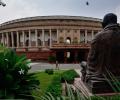
The government's agenda also includes the Cryptocurrency and Regulation of Official Digital Currency Bill, 2021.

Among the lot, Rallis India, Escorts, Jubilant Life Sciences, and Crisil added half of the total gains made in the ace stock-picker's portfolio.

Prime Minister Modi has certainly pulled back, and his political capital -- dependent as it is on an image that he knows best and never retreats -- may have taken a bit of a beating. But, equally, it is hard to say that the protesters have 'won', argues Mihir S Sharma.

Agriculture activity, according to recent channel checks by Prabhudas Lilladher, is expected to continue at a strong pace in FY22.
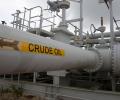
Retail inflation hit an eight-month high of 6.07 per cent in February, remaining above the RBI's comfort level for the second month in a row, while wholesale price-based inflation soared to 13.11 per cent on account of hardening of crude oil and non-food item prices, government data showed on Monday. The previous high for retail inflation was 6.26 per cent in June 2021. The consumer price index (CPI) based retail inflation, which is taken into account by the Reserve Bank of India (RBI) while deciding its monetary policy, rose mainly because of costlier food items, as per the data released by the National Statistical Office (NSO).

IMD expects day temperatures to remain above-normal in select regions across the country between March and May 2021.

'I see a virtually zero impact on the sales of new vehicles with this move,' said an expert

'For the first time, all major countries are discovering India's indispensability to their own foreign policy interests.'

Shankar Prajapati, a 57-year-old potter in Dharavi, has given up hope of getting a bigger house for his family. He lives cheek by jowl in a hutment measuring 200 square (sq.) feet (ft) in the nondescript shanty town. "We have surrendered to our fate. We cannot wait forever for better accommodation. "Perhaps we are not meant to dream big," despairs Prajapati. Raju Korde, president, Dharavi Redevelopment Committee, and a local resident, agrees with Prajapati.

Analysts forecast the fuel at $85 a barrel in 2015 and $90 a barrel in 2016; politics, demand-supply to pressure crude.

The retail inflation rate breached the 6 per cent upper tolerance limit of the RBI for the first time in seven months in January, while the wholesale price index stayed in double-digits for the 10th month in a row, showed two sets of data released by the government on Monday. Retail inflation, the key input for the RBI while reviewing the repo rate every two months, soared during the month mainly because of a spike in certain food items. The previous high for retail inflation was 6.26 per cent in June 2021.

sharper-than-expected economic recovery back home, analysts say, can fuel a further rally in domestic cyclicals, industrials, and financials as global central banks continue with their easy money policy.
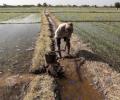
Bharat Krishak Samaj demanded that the Pradhan Mantri Fasal Bima Yojana should be replaced with a new crop insurance and compensation scheme.

M&M was the top loser in the Sensex pack, shedding over 2 per cent, followed by Dr Reddy's Bharti Airtel, Tech Mahindra, HUL, ICICI Bank and Infosys. NSE Nifty dropped 64.80 points to 14,341.35.
The earnings are, however, expected to be down around 2 per cent on a sequential basis due to pent-up demand getting exhausted and the adverse impact of rising metals and energy prices on consumer goods and manufacturing companies.

Economists V Shunmugam and D G Prasad working with India's largest commodity bourse -- the Multi Commodity Exchange -- have come out with a research paper arguing that the government urgently needs to shift the method of calculating inflation.

Shetkari Sanghatana president Anil J Ghanwat said the panel's report was in 'favour of farmers' and will decide next week on releasing the report in the public domain.

International oil prices retreated from an over seven-year high but was still above $100 a barrel and continue to pose threat to India's inflation rate and current account deficit. While there are no supply concerns as the oil route remained open, consumers will feel the pinch when PSU oil firms start passing on the increase in international rates through a revision in petrol and diesel prices, which have been on a pause for over three-and-a-half-months in view of elections in Uttar Pradesh and four other states. The government is "closely monitoring the situation" and will "take appropriate steps as and when required", a top official said. Brent crude oil surged past $105 per barrel on Thursday for the first time since August 2014, following Russia's invasion of Ukraine.

Navi Mutual Fund (MF), among the latest entrants in the Rs 35-trillion industry, is looking to make a mark in the passive investment space, which is gaining traction in the country. The Flipkart co-founder Sachin Bansal-led fund house filed seven offer documents with the market regulator Securities and Exchange Board of India (Sebi) on a single day this week. Some of the schemes Navi MF plans to launch are Navi NASDAQ 100 Fund of Fund, Navi Nifty Commodities Index Fund, Navi Nifty 100 ESG Index Fund.
China has cast a long shadow on India's economy.

Most analysts as well as company executives say the rally in commodity prices is ill-timed coming just when firms were recovering from disruptions such as demonetisation & introduction of GST
